

Hey guys — take a breath. You’re not alone and you’re not crazy. Let’s unpack this together.
There’s a moment that happens quietly in many marriages affected by pornography addiction. It isn’t the first discovery. It isn’t even the second. Most women stay through the first few shocks because they believe in love, commitment, and second chances.
The moment comes later.
It’s the moment when you realize you’ve been living inside a cycle instead of a relationship.
Apology. Hope. Relapse. Denial. Silence. Repeat.
At first you tell yourself that marriage is hard work. That every couple goes through difficult seasons. That addiction is a struggle and people deserve compassion. And all of that is true.
But compassion without boundaries slowly becomes self-abandonment.
Porn addiction inside a marriage creates a unique kind of emotional confusion. It’s not always visible like alcohol or drugs. There are no empty bottles on the counter. No physical evidence lying around the house. The damage often happens in private spaces — screens, browsers, late nights, and hidden histories.
So the question many women wrestle with isn’t simply “Is this hurting me?”
It becomes something deeper.
“How long am I supposed to stay while it hurts?”
That’s the question we’re going to talk about today.
Not from a place of anger or revenge. From a place of grounded clarity.
Because sometimes the most loving thing you can do — for yourself and for the other person — is stop pretending that nothing is broken.
The Reality of Porn Addiction in a Marriage
When pornography becomes compulsive in a relationship, it stops being about sexual content and starts becoming about trust.
Marriage is built on emotional safety. It’s the quiet agreement between two people that says, “We are honest with each other. We protect each other’s dignity. We face life together.”
Porn addiction quietly undermines that agreement.
It introduces secrecy, comparison, and emotional distance. It creates a second world inside the relationship — one the other partner was never invited into.
Over time, that secrecy begins to shape the emotional climate of the marriage.
Conversations feel surface-level. Intimacy feels disconnected. You begin noticing that your partner is physically present but psychologically elsewhere.
Psychologists studying compulsive sexual behavior have found that secrecy itself is often more damaging to relationships than the behavior being hidden. Research published in the Journal of Sex and Marital Therapy shows that partners who discover secret pornography use often experience betrayal trauma symptoms similar to those seen in infidelity.
And that makes sense.
Because betrayal isn’t just about physical affairs. It’s about broken trust.
When someone repeatedly promises change but continues the same behavior in secret, the nervous system stops feeling safe.
You start scanning for clues. Checking phones. Overanalyzing tone of voice. Trying to solve a puzzle you were never meant to live inside.
That level of emotional vigilance slowly drains the life out of a relationship.
And eventually, something inside you begins asking a question you never wanted to ask.
Is staying actually helping anyone?
Why So Many Women Stay Longer Than They Should
Before we talk about when leaving may become necessary, we need to acknowledge why so many women stay longer than their hearts can sustain.
It’s rarely because they’re weak.
Most women stay because they are deeply committed people.
They believe in marriage. They believe in healing. They believe people can change. Many women also carry a strong sense of responsibility for keeping the family intact, especially when children are involved.
Society reinforces this belief constantly. Women are often praised for loyalty, forgiveness, and endurance. Those qualities are beautiful — until they start being used to justify suffering that never ends.
Another reason women stay is hope.
Hope is powerful. When someone struggling with pornography addiction apologizes sincerely, promises therapy, and expresses regret, it creates the possibility that things could get better.
And sometimes they do.
Many marriages recover from addiction when the addicted partner commits to real change. Therapy, accountability groups, and transparency can transform a relationship when both people are willing to do the work.
But hope becomes dangerous when it replaces reality.
When promises continue but change never follows, hope turns into a waiting room where years quietly disappear.
The Signs That the Marriage May No Longer Be Safe for You
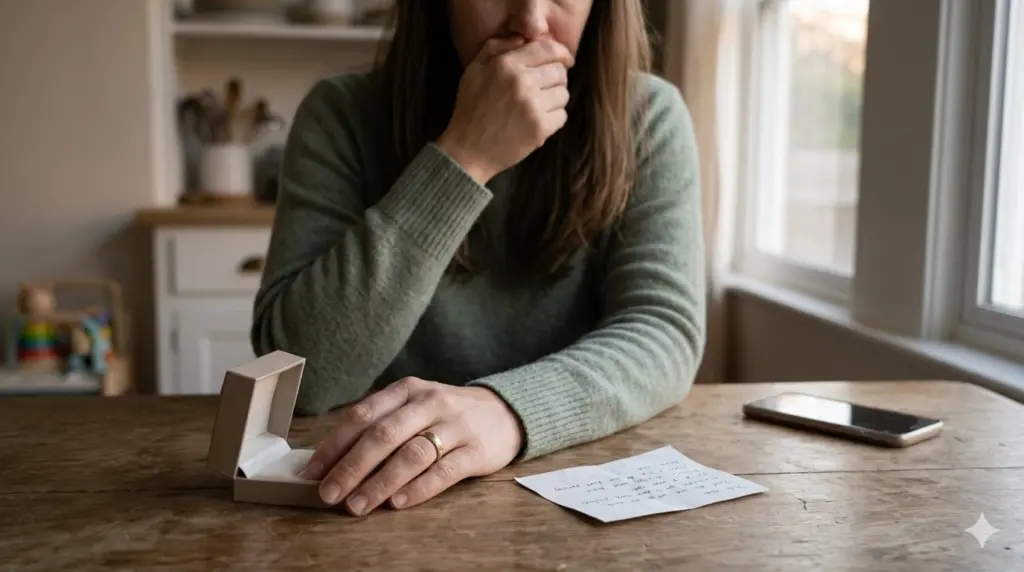
Every relationship is unique, and no one outside your life can decide when you should leave. But there are patterns that therapists consistently recognize as warning signs.
The first is repeated deception.
Addiction recovery requires honesty. If your partner continues lying, hiding, or minimizing the behavior even after being confronted, it signals that secrecy is still being protected.
Without honesty, healing simply cannot happen.
Another sign is a refusal to seek help.
Porn addiction rarely resolves through willpower alone. Sustainable recovery usually involves therapy, accountability, or structured support systems. When someone refuses all forms of help while expecting the marriage to continue normally, they are effectively asking the relationship to absorb the consequences of their addiction indefinitely.
Over time, that becomes unsustainable.
Emotional safety is another critical factor.
If discussions about pornography lead to anger, gaslighting, blame, or intimidation, the environment becomes psychologically unsafe. Some partners shift responsibility onto the betrayed spouse, accusing them of being controlling, insecure, or dramatic.
This tactic erodes your confidence in your own reality.
No marriage can heal while one partner is forced to doubt their sanity.
Another painful but important sign is the disappearance of your own identity.
Many women in relationships affected by addiction begin shrinking themselves to keep the peace. They stop bringing up concerns. They stop expressing emotional needs. They focus entirely on managing the other person’s behavior while neglecting their own wellbeing.
When you realize you no longer recognize the version of yourself living inside the marriage, that awareness deserves attention.
Because the cost of staying should never be losing yourself.
The Anchor Action: Reclaim Your Inner Authority
If you’re standing at this crossroads, the most powerful step you can take is reclaiming your internal authority.
That means stepping out of the role of investigator, fixer, or emotional caretaker for the addiction.
Instead of asking, “How do I make him stop?” the question becomes something far more important.
“What do I need in order to feel safe and respected in a relationship?”
Write those needs down.
Not as demands for someone else to meet immediately, but as clarity for yourself.
Healthy relationships require honesty, accountability, emotional safety, and mutual respect. When those elements are consistently absent despite repeated conversations and opportunities for change, the relationship may no longer be capable of supporting your wellbeing.
Psychologically, this shift is powerful because it returns focus to the only person you can truly control — yourself.
It moves you from helplessness into agency.
Leaving a marriage is never easy. It involves grief, fear, financial considerations, and often the heartbreak of disrupted family dynamics.
But sometimes leaving is not about failure.
Sometimes it’s about refusing to live the rest of your life waiting for someone else to choose honesty.
What Life Can Look Like After You Choose Yourself

One of the greatest fears women carry when considering leaving a marriage is the fear of being alone.
Loneliness can feel terrifying when you’ve built your life around partnership and family. But something surprising often happens when someone finally steps out of a relationship that has been draining their emotional energy for years.
Clarity returns.
The constant tension disappears. The mental exhaustion of trying to manage someone else’s secret life begins to fade. Slowly, the nervous system starts calming down.
You begin sleeping better.
You start noticing your own thoughts again.
Your identity, the one that slowly disappeared inside the chaos, begins resurfacing.
You get to come back to yourself now.
That doesn’t mean the road ahead is easy. There will be grief. There will be moments of doubt. But there will also be something that was missing for a long time.
Peace.
And peace is not something anyone should have to negotiate for inside their own life.
A Final Word
If you are wrestling with the question of whether to leave a marriage affected by pornography addiction, please remember this: you are allowed to protect your emotional health.
Staying is not always the noble choice. Leaving is not always the failure.
What matters most is honesty — both from your partner and from yourself.
Some marriages survive addiction through courage, accountability, and real healing. Others reach a point where the healthiest path forward is letting go.
Either way, your life does not have to revolve around someone else’s hidden behavior.
You deserve relationships built on truth.
And if you’re walking through this painful decision right now, the Back to Me Healing community exists to support people navigating exactly these kinds of crossroads.
Because sometimes the bravest thing you can do is not fixing the relationship.
Sometimes the bravest thing you can do is coming back to yourself.